In radio frequency (RF) technology, devices like power amplifiers, transmitters, and transceivers push the boundaries of performance, heat is an inevitable byproduct. As RF systems operate at higher power levels, efficient thermal management becomes even more critical. Thermal interface material (TIM) bridges the gap between heat-generating components and heat sinks, ensuring optimal performance, reliability, and longevity. Without them, overheating could lead to signal degradation, reduced efficiency, or outright failure. Air gaps between surfaces (caused by microscopic irregularities) act as thermal insulators.
Why Thermal Management Matters in RF Systems
RF devices, especially power amplifiers, generate significant heat due to power dissipation. For instance, high-power amplifiers used in RF systems operate at elevated temperatures where poor heat dissipation risks thermal runaway or decreased meantime between failures. Unlike general electronics, RF applications add unique challenges such as electromagnetic interference (EMI), radio frequency interference (RFI), and the need for materials that are both thermally and electrically conductive. TIMs fill these voids, boosting heat transfer by orders of magnitude compared to not having any TIM.
In RF power amplifiers, heat must flow efficiently from the transistor die through the package to a heat sink or chassis. Poor thermal interfaces can cause hotspots which affect gain, linearity, and overall system efficiency. TIMs can optimize thermal performance by reducing junction temperatures and improving amplifier reliability.
Types of Thermal Interface Materials for RF
TIMs come in various forms with each suited to different scenarios. Typically, TIMS used for RF applications fall into two types which are bonded and compressible. Here’s a breakdown:
Bonded TIMs: These create permanent connections, like solder joints. Solder offer the best thermal performance through metallurgical bonds but require careful application to avoid cold solder joints and voiding. This type of TIM are ideal for high-power power amplifiers, where thermal performance is valued over the ability to rework.
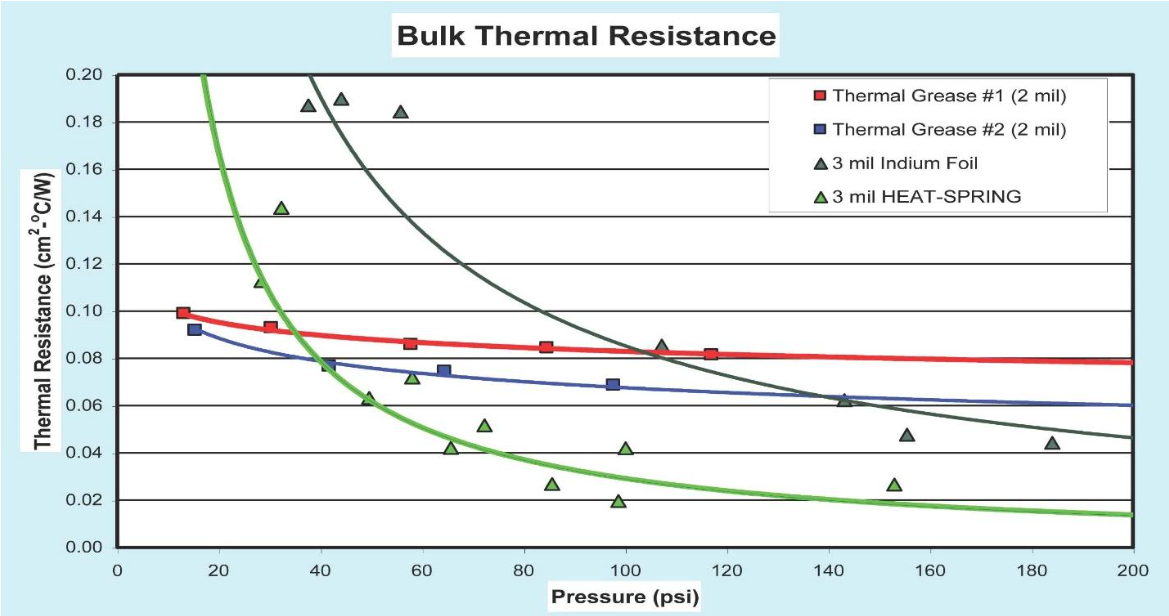
Compressible TIMs: Think thermal greases, gels, pads, or foils. These types are reworkable and fill gaps under pressure. Thermal greases provide good wetting but need compression, and at least 80% coverage. Indium foil (2-4 mils thick) is popular for flange-based packages, offering easy application, but requires compression to work properly.
Advanced options include carbon-based TIMs like graphene films for their high conductivity, or even synthetic diamond heat spreaders for ultra-high performance RF power amplifiers, where traditional materials fall short.
Key Considerations for Applications
Selecting the right thermal interface material for RF applications isn’t just about thermal conductivity, dielectric properties also matter to avoid signal loss. Materials must have low dielectric constants and loss tangents, especially at higher frequencies.
Other factors:
Reworkability: Compressible TIMs like greases allow easy disassembly, unlike permanent epoxies.
Thickness and Coverage: Thinner application minimize resistance, but uniform coverage is key to prevent hotspots.
Environmental Stability: RF systems in aerospace or defense industry’s face vibration, shock, and temperature swings, so TIMs must be able to withstand these harsh environments without pump-out, outgassing, or degradation over time.
Cost: In some cases, good enough beats out best performance. Thermal greases are the most affordable option. Indium is more expensive and requires more delicate handling and placement. For other materials (such as diamond heat spreaders), cost is the biggest limiting factor in their use.
Compression: TIMS require compression to work effectively. The better the compression the better the rate of thermal transfer. (graph from https://www.indium.com/ )
Wrapping Up
Thermal interface materials are the glue (literally and figuratively) that keeps RF devices running cool. By choosing the right type and applying it thoughtfully, engineers can mitigate heat-related woes, boosting performance in everything in the RF world. As RF technology evolves, so will innovations in TIMs, ensuring designers stay ahead of the heat curve. If you’re designing an RF system, don’t overlook these critical components, they might just be the difference between success and meltdown.
Click here to read about the right heat sink application for your power amplifier to expand your knowledge.
By James Hall - RF Engineer, NuWaves RF