Guide to RF connectors for space environments and high frequency systems – bandwidth, power handling, integration, multipactor, and Paschen discharge and corona discharge.
RF connectors are often selected by familiarity or by a single headline specification, such as “rated to 40 GHz.” In practice, the connector interface, together with the launch transition, mechanical integration, and assembly controls, can become the limiting factor for bandwidth, stability, power handling, and reliability. In space and space-adjacent applications, additional constraints arise from vacuum and pressure-regime discharge phenomena, including Paschen/corona discharge and multipactor, as well as from thermal cycling, vibration, contamination control, and materials behavior. This paper presents a practical framework for selecting RF connectors for high-frequency, space-relevant systems, with emphasis on connector families, integration details, and verification methods that support successful program execution.
Why RF Connectors Matter More at High Frequencies
At microwave and millimeter-wave high frequency systems, an RF connector is not simply a passive port. It is part of the transmission-line system and can strongly influence overall performance as bandwidth extends into the upper microwave range or packaging density becomes aggressive. Even when an interface is nominally 50 ohms, small discontinuities at the mating plane, dielectric boundaries, or PCB-to-coax transition can introduce reflections that degrade return loss, disturb group delay, and in some cases contribute to localized heating.
RF connector performance at high frequency is also inseparable from repeatability. Two assemblies built around the same connector family may behave differently depending on pin depth control, torque consistency, contact wear, contamination, and the effectiveness of the launch in preserving the coax-to-microstrip or coax-to-stripline field geometry. For that reason, frequency rating should be treated as a starting point rather than as the final basis for selection.
A Practical Selection Scorecard
A robust connector selection process begins with a short scorecard that captures the design’s actual requirements. The goal is to avoid late-stage surprises, such as a connector that appears acceptable at room temperature but drifts after thermal cycling, or an interface that is nominally rated to 65 GHz while the PCB launch dominates the actual mismatch.
Electrical performance typically begins with return loss, VSWR, and insertion loss across the frequency band of interest. For millimeter-wave applications, it is also useful to define acceptable stability, including the maximum S-parameter drift that can be tolerated across temperature, after mate-and-demate cycles, and after environmental screening.
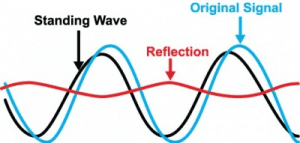
Power handling should be stated as a function of both operating mode (e.g., CW versus pulsed) and mismatch. In many cases, the limiting condition is not average power but peak voltage or current at standing-wave peaks driven by worst-case VSWR. Connector selection should therefore account for both intended operating conditions and plausible worst-case conditions.
Packaging and integration constraints include connector density, blind-mate requirements, wrench access for controlled torque, and allowable cable side-load. In many real systems, long-term reliability is determined more by mechanical integration, including strain relief, retention, and alignment control, than by the connector’s nominal electrical specification.
Environment and assurance considerations include whether the hardware will be exposed to vacuum, partial pressure, trapped volumes, high altitude, thermal-vacuum cycling, vibration, shock, or process restrictions related to materials and cleanliness. For space programs in particular, designers must plan for multipactor risk reduction and verification in accordance with accepted standards and handbooks.
RF Connector Families for High Frequency Systems
High-frequency RF connectors selection is rarely about identifying one “best” interface – but rather about choosing a family that meets the needs of the application, including bandwidth and mode margin, repeatability and mating durability, power and thermal handling, density and blind-mate requirements, and, where relevant, vacuum or pressure-regime discharge risk. The summary below is intentionally broad. Its purpose is to provide a practical field guide to common connector families and the reasons connectors often become limiting, rather than to compare vendors or recommend one product line over another.
RF Connectors Field Guide
BNC (bayonet) — typically DC to about 4 GHz class. BNC is well suited for lower-frequency RF, instrumentation, video, and IF applications where quick connection and disconnection are valuable. Its practical limitations at higher frequencies usually come from interface stability, repeatability, and geometry that was not optimized for microwave-grade launches.
TNC (threaded) — typically DC to about 11 GHz class, with higher-frequency variants available. TNC is often used where a more mechanically secure threaded alternative to BNC is preferred in ruggedized or fielded systems. Its limiting factors are usually the electrical geometry of the specific series, tolerance control, and the extent to which the selected version supports higher-frequency operation.
Type N (threaded) — commonly DC to about 18 GHz class. Type N is valued for its mechanical robustness and relatively strong power handling capability, making it common in infrastructure, test setups, and medium-power microwave systems. Its size limits density, and many implementations prioritize durability and power handling over very low reflection at millimeter-wave frequencies.
SMA (threaded) — commonly DC to about 18 GHz, with extended and precision variants higher. SMA remains one of the most widely used microwave interconnects because it offers a strong balance of size, availability, and performance. At higher frequencies, however, the true limiting factors are often torque control, pin depth, contact wear, contamination, and launch quality rather than the nominal connector family alone.
SSMA (smaller threaded) — commonly used into the tens of GHz, depending on series and implementation. SSMA provides higher packaging density than SMA and can be attractive when space is limited, but a threaded interface is still preferred. Its smaller geometry generally reduces power margin and increases sensitivity to handling and launch design, while hermetic versions introduce additional transition considerations.
2.92 mm (“K”) precision threaded — 40 GHz class. This family is a common upper-microwave workhorse because it offers strong repeatability, good ecosystem support, and useful bandwidth margin for systems operating to 40 GHz. Its practical limits are usually driven by interface and launch tolerances, connector and adapter stack-up, and the need for disciplined torque and gauging.
2.4 mm precision threaded — 50 GHz class. This family is often used in hardware or test environments where repeatable performance beyond 40 GHz is required. As compared with 2.92 mm, tolerances become tighter, handling sensitivity increases, and launch design becomes even more important.
1.85 mm (“V”) precision threaded — 67 GHz class. This interface is commonly used where bandwidth to about 67 GHz is required and interface control is critical. It provides excellent performance potential, but very tight tolerances, contamination sensitivity, and adapter wear can quickly become limiting in practice.
SMP (push-on / blind-mate) — 40 GHz class. SMP is widely used in high-density modules and board-to-board or cable-to-board assemblies where blind mate and compact packaging are important. The usual limiting factors are retention style, insertion force versus wear life, tolerance stack-up, and the mechanical guidance strategy used to support mating.
SMPM / Mini-SMP — commonly up to about 65 GHz class for many designs. These families are used when density requirements exceed what SMP can comfortably support. Their benefits in packaging come with increased sensitivity to alignment, wear, and assembly handling, so mechanical guidance and validation become especially important.
SMPS — compact push-on ecosystem. SMPS is often considered when board-level density requirements become extreme. As with SMP and SMPM, the dominant concerns tend to be alignment, retention, mating durability, and launch design, with actual frequency capability depending strongly on the specific implementation.
Hermetic RF feedthroughs and bulkhead seals — various interface forms. These are used where leak rate, sealed cavities, or pressure boundaries are formal requirements. Their limiting behavior often stems from the fact that the hermetic structure itself is an RF transition, typically involving glass, ceramic, and metal interfaces that must be treated as part of the design rather than as transparent interconnect hardware.
3.2 Frequency Rating Versus Real System Limits
Published frequency ranges are important, but actual system limits are often set by the launch, tolerance stack-up across connectors, adapters, and cables, and the mismatch and thermal environment of the application. Catalog power ratings are also commonly given at a specific reference frequency, often 1 GHz, under controlled conditions. Those values are useful as order-of-magnitude anchors, but they are not substitutes for a thermal and mismatch verification plan at the intended operating frequency.
While this section includes connector families through 67 GHz for context, the practical design envelope for NuWaves RF Solutions is primarily DC to 40 GHz. Within that range, the company develops high-power amplifiers from VHF through Ku-band, along with converters, filters, and multiplexed RF assemblies where repeatability, packaging, and verification discipline are often more important than extending to the highest nominal connector frequency.
What “Space Rated” Changes in Connector Selection
Connector selection in space and space-adjacent systems is governed by the same electrical fundamentals as terrestrial hardware, but the margin for error is often smaller, and the consequences of a poor decision are much greater. In that environment, three factors typically raise the bar.
First, environment-induced drift becomes a primary concern. Thermal cycling can change contact force, alter dielectric behavior, and stress solder joints or compression-mounted launches. Vibration and shock can also loosen threaded couplings if retention and mechanical support are not designed and verified.
Second, materials and contamination control become more important. Outgassing concerns can affect the choice of polymers, lubricants, adhesives, and cleaning processes. Contamination also affects more than reliability alone; it can influence high-field behavior, contact quality, and RF linearity.
Third, vacuum and pressure-regime discharges introduce failure modes absent in ordinary laboratory air. Even when a system is not considered “high voltage” in the traditional sense, RF hardware can still produce high local RF voltages at standing-wave peaks, making field management, trapped-volume control, and cleanliness relevant design concerns.
Corona and Paschen Discharge: Why Trapped Volumes Matter
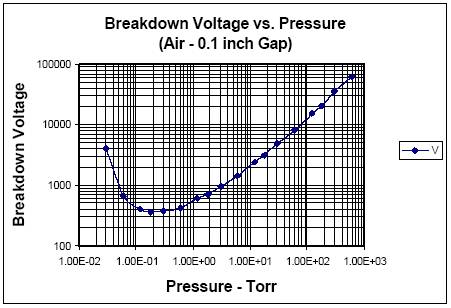
Corona, or more generally, gas discharge, is a pressure-regime phenomenon. At certain combinations of pressure and gap distance, often discussed in the context of Paschen behavior, the breakdown voltage can be significantly lower than it is at either atmospheric pressure or deep vacuum. As a result, partially pressurized cavities and trapped volumes can become common sources of risk in aerospace hardware.
From a connector perspective, risk increases when there are small gaps with high electric field, poorly vented cavities, or features that can trap gas. Sharp edges, abrupt discontinuities, and poorly controlled transitions can raise local field intensity and make discharge more likely. Effective mitigation is usually a combination of geometry and process: reducing field concentration by smoothing transitions, controlling edge condition and surface finish, providing venting where appropriate, and maintaining assembly cleanliness so debris and contamination do not create avoidable breakdown sites.
Multipactor: A Vacuum RF Breakdown Risk
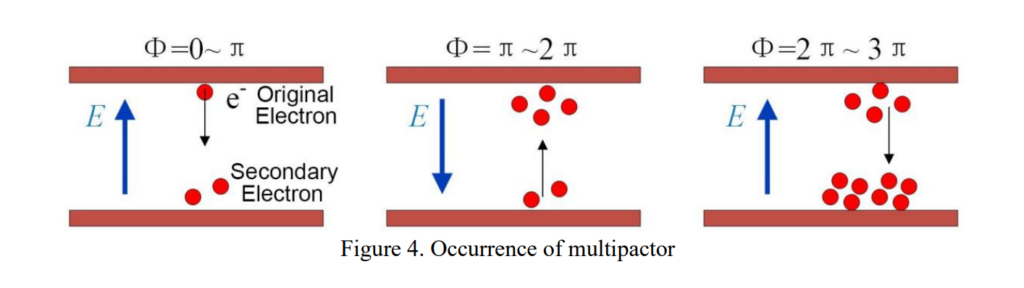
Multipactor is a vacuum electron-avalanche phenomenon driven by RF fields and secondary electron emission. It is not a connector-only issue; it is a broader high-field RF issue that can occur in waveguides, cavities, coaxial structures, and transitions where local field intensity is high. In that sense, RF connectors are relevant because they are often one of several locations where geometry, gaps, and surface conditions can either control the risk or make it worse.
In coaxial connectors and transitions, multipactor risk is commonly associated with small gaps, abrupt steps, sharp features, and surfaces whose secondary-electron characteristics support electron multiplication. Mitigation generally combines geometry that lowers field concentration, surface and material choices that reduce susceptibility, and verification through analysis or test appropriate to the mission environment.
A practical point is that multipactor is often a system-level concern rather than a part-level one. Mismatch conditions can create unexpectedly high local RF voltage, and discontinuities in launches, adapters, and transitions can concentrate fields in ways that are not obvious from a simple connector datasheet. Treating the connector interface as a controlled part of the RF design, rather than as a catalog afterthought, materially reduces this risk.
Power Handling: The Hidden Role of Mismatch and Local Heating
Connector power handling is often misunderstood as a single catalog number. In reality, it depends on frequency, conductor and dielectric loss, thermal conduction paths, contact resistance, and mismatch. Manufacturer data can provide useful reference points, but those ratings must be translated carefully to the actual operating band and system environment.
The importance of mismatch is straightforward. Standing waves create local peaks in voltage and current along the transmission line. High voltage tends to increase electric-field stress, which is relevant to discharge concerns, while high current increases resistive heating. If a system is expected to experience high VSWR, load variability, or off-nominal operating states, connector power verification should be performed under representative mismatch conditions rather than only under a well-matched 50-ohm condition.
8. Integration Details That Determine Real Performance
8.1 Torque, Gauging, and Inspection Are Design Requirements
Threaded precision connectors assume controlled torque. Under-torque can reduce contact stability, while over-torque can damage the interface or alter contact geometry. In high-frequency systems, torque is best treated as a controlled variable supported by calibrated tools, clear workmanship practices, and inspection methods that catch interface damage before it becomes a late-stage RF problem.
8.2 Mechanical Support and Strain Relief Prevent Electrical Problems
Many connector failures that first appear electrical are actually mechanical in origin. Cable side-load, inadequate panel support, misalignment in blind-mate arrays, or thermal-cycling stress at a solder joint can all degrade RF performance. Keep-out zones, cable routing rules, mounting details, and strain-relief provisions are therefore part of the RF design, not secondary drafting details.
8.3 PCB Launch Design Is Where Many GHz Are Lost
At high frequency, the dominant reflection is often the PCB launch rather than the connector interface itself. Reference-plane continuity, via fencing, resonant-stub avoidance, and dielectric-transition management can have a larger effect on return loss than the difference between two otherwise similar connector families. A connector that looks excellent on paper can still underperform if the launch is not treated as part of the transmission line.
Verification: How High-Confidence Programs Reduce Connector Risk
Verification should be sized to program risk, but in high-reliability and space-relevant systems, it is common to combine analysis and test in a structured plan. The goal is not simply to confirm nominal performance, but to expose the integration and environment-driven issues that connector datasheets do not capture.
Electrical verification typically includes S-parameter measurement across the band, with attention paid to repeatability and drift. At higher frequencies, calibration discipline, fixture strategy, and de-embedding, where needed, are central to obtaining meaningful results.
Power and thermal verification should include temperature rise under representative operating conditions, including mismatch when appropriate. If corona, Paschen, or multipactor concerns exist, the verification plan should define the applicable limits, test conditions, and acceptance criteria at the start of the program rather than after the design is effectively fixed.
Environmental screening, including thermal-vacuum cycling, vibration, shock, and mate-and-demate cycling, should be used to expose the weak points most likely to appear in service. These verification principles are not theoretical; they directly shape connector and interconnect decisions in real hardware, as illustrated by the following NuWaves example.
Real-World Example: High-Power GPS Triplexer Design and Multipactor Verification
A representative example of NuWaves RF Solutions’ capability is a high-power L-band GPS triplexer under a Phase II Small Business Innovation Research (SBIR) effort. In this program, the challenge was not simply to realize three bandpass functions in one assembly, but to do so while supporting substantially wider bandwidth, high transmit power, low insertion loss, and operation free of unacceptable multipactor or passive intermodulation effects. The resulting triplexer combined the L1, L2, and L5 GPS paths in a compact cavity-based structure using slab-line combline resonators, pseudoelliptic filtering functions, cross-coupled architectures, and manifold coupling to maintain bandwidth, channel isolation, and low loss. Program goals included bandwidths up to 45 MHz, power handling of 400 W in the L1 band and 150 W in the L2 and L5 bands, and insertion loss below 0.5 dB.
This program is directly relevant to RF connector selection because it demonstrates a central point of this paper: in high-power, space-relevant RF hardware, the connector cannot be treated as an isolated catalog choice. The connector must be selected as part of the complete RF and mechanical implementation. In this triplexer, the wedge TNC interface reflected that broader system-level approach. The interface was not chosen solely for nominal frequency coverage, but also for how well it supported the electrical demands of the assembly, along with the mechanical packaging, mounting method, and test configuration required for a multipactor-sensitive cavity structure. In this type of hardware, a robust threaded interface helps provide secure retention, repeatable mating, and controlled integration into the housing, while the wedge-style implementation supports a more deliberate mechanical relationship between the connector and the cavity assembly.
The value of that approach becomes clearer when viewed in the context of verification. The triplexer was subjected to a structured multipactor test campaign at the Harris Geospatial Systems test facility, using one driven path at a time with unused ports terminated. Testing was conducted in high vacuum, at a chamber pressure on the order of 1.0 × 10^-5 Torr, and at multiple temperatures including +25 C, +61 C, and -24 C. The test setup monitored third-harmonic response and null-monitor behavior as indicators of multipactor onset, and peak power was taken as high as the 800 W limit of the available test bed. This is exactly the kind of environment in which connector selection, cavity geometry, and interface implementation must work together, because local field concentration and discontinuities can become limiting even when nominal bench measurements appear acceptable.
The resulting performance showed that the design approach was sound. The test report concluded that the triplexer produced a satisfactory set of multipactor test results with margin. The L1 path passed at 800 W peak in both hot and cold conditions; the L5 path also passed at 800 W peak in both conditions; and the L2 path demonstrated acceptable results throughout the campaign, including a clean cold rerun at a reduced peak level. Pre-test and post-test S-parameter measurements were also reported as acceptable, indicating that the hardware maintained RF integrity through multipactor evaluation.
For NuWaves RF Solutions, the importance of this example extends beyond one triplexer. It reflects an engineering workflow that applies broadly across the company’s DC to 40 GHz product space, including high-power amplifiers from VHF through Ku-band, as well as converters, filters, and multiplexed RF assemblies. NuWaves does not approach connector selection as a procurement exercise divorced from the rest of the hardware. The interface is selected as part of the complete RF solution, with attention to power handling, field control, packaging, mounting, verification, and mission environment. In the case of this GPS triplexer, the wedge TNC interface was one element of a larger design strategy that enabled a high-power cavity assembly to move from concept through fabrication and into multipactor-tested hardware.
Programs like this show where NuWaves RF Solutions adds value beyond component design alone. The company’s strength lies in translating demanding mission requirements into manufacturable, testable RF hardware and carrying that hardware through disciplined verification. When a space-relevant system must combine high power, low loss, controlled filtering behavior, and confidence against vacuum-related breakdown mechanisms, connector selection becomes part of a broader RF design and qualification strategy. The GPS triplexer example demonstrates how NuWaves applies that strategy in practice.
Conclusion and Key Takeaways
High-frequency RF connector selection is a system-design problem. The strongest outcomes come from a clear requirements scorecard, the selection of connector families that match both RF and mechanical realities, treating launch and integration as first-class design elements, and verification under realistic operating conditions rather than idealized bench assumptions.
For space and space-adjacent systems, Paschen/corona and multipactor are not edge cases to be addressed after the layout is complete. They should be considered early in the architecture, transition design, interface selection, and verification plan. When that happens, connector choice becomes more than a datasheet exercise; it becomes part of a disciplined engineering process that improves both performance and qualification confidence.
By Elijah Houck – Senior RF Design Engineer at NuWaves RF Solutions