“MIL-STD-810 certified” appears on a lot of datasheets, and on its own it tells you almost nothing. There is no certifying body for MIL-STD-810. It is a test method standard, not a specification, and it does not say what any product must survive. It describes how to test, and it leaves the choice of which tests and which limits to the program. A product can be “MIL-STD-810 tested” after passing a single mild method, or after a qualification campaign that took months. The label is the same.
This article explains what the standard actually contains, what the current revision is, what to ask a vendor who claims compliance, and how NuWaves specifies and tests its own RF hardware against it.
What MIL-STD-810 Is
MIL-STD-810 is the Department of Defense standard for environmental engineering considerations and laboratory tests. The current revision is MIL-STD-810H, released in January 2019, with Change 1 issued in May 2022. It replaced MIL-STD-810G, which many older datasheets still cite.
The standard has three parts. Part One describes the tailoring process: how to work out, from a product’s life cycle, which environments it will see and at what severity. Part Two contains the laboratory test methods. Part Three covers world climatic regions. Almost every “810” claim refers to Part Two.
Part Two has 29 test methods, numbered 500 through 528. Each method carries a suffix that increments when the method is revised, so the suffix tells you which revision of the standard the test was run to. The methods RF hardware meets most often:
- Method 500.6, Low Pressure (Altitude). Operation and storage at reduced pressure. Relevant to anything mounted on an aircraft.
- Methods 501.7 and 502.7, High and Low Temperature. Storage and operating extremes, plus the effect of temperature on performance.
- Method 503.7, Temperature Shock. Rapid transitions, such as a module moving from a hangar into flight.
- Method 507.6, Humidity. Warm, humid cycling over days or weeks.
- Method 509.7, Salt Fog. Rewritten in Change 1. Relevant to shipboard and coastal installations.
- Method 514.8, Vibration. Random and sinusoidal profiles that differ by platform. This is the method most often tailored, and most often misquoted.
- Method 516.8, Shock. Functional shock, crash safety, transit drop and bench handling.
Less common but important on specific platforms: Method 511.7 (Explosive Atmosphere), Method 517.3 (Pyroshock) for launch vehicles and spacecraft, Method 519.8 (Gunfire Shock) and Method 528.1 (Mechanical Vibrations of Shipboard Equipment).
Why the Label Means So Little on Its Own
The standard says so itself. Its stated emphasis is on tailoring a product’s environmental design and test limits to the conditions that product will actually experience, and on laboratory methods that replicate the effects of those environments rather than the environments themselves. In practice that means three decisions are left to whoever orders the test:
- Which methods. A module that lives inside an air-conditioned shelter does not need Rain (Method 506.6) or Sand and Dust (Method 510.7). Testing it to those methods proves nothing useful.
- Which procedures within each method. Most methods contain several procedures. Method 516.8 alone covers functional shock, transportation shock, crash hazard and more, and they are not interchangeable.
- Which limits. The vibration and altitude limits for a product installed on an H-60 helicopter are different from those for a product installed on an F-22. Both can be “tested to Method 514.8.”
So when a datasheet says “MIL-STD-810 certified,” the questions that matter are: which revision, which methods, which procedures, what limits, who ran the tests, and is there a test report. A vendor who has done the work will answer all six without hesitation.
How NuWaves Specifies Its Standard Products
NuWaves standard products are designed for ground, surface and airborne use, and their datasheets state the environmental limits directly rather than relying on the label. For a typical NuPower amplifier that means an operating baseplate temperature range of -40°C to +85°C, operation to 30,000 feet, 95% non-condensing humidity, and a random vibration profile on all three axes. The NuPower 12B01A-01 datasheet is a representative example; each product’s own datasheet governs.
Those limits cover the large majority of program requirements. We design standard products to them, rather than qualifying every product to the full range of every method, because that is what keeps the cost of a COTS RF module reasonable. When a program needs formal qualification to a specific set of methods and limits, we can support that on a standard product or on a custom design.
Testing at NuWaves
We run selected MIL-STD-810 environmental methods in-house, alongside MIL-STD-461 EMI testing in our anechoic chamber and MIL-STD-704 aircraft power-quality testing. We can run many, though not all, of the methods in those standards, and we are not a certified test house. The purpose of our in-house testing is confidence testing: finding and fixing problems early, so that a design arrives at the certified test facility ready to pass formal qualification the first time.
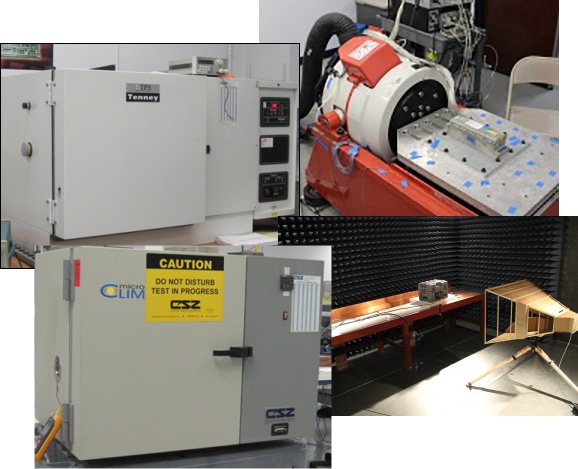 Figure 1: In-house environmental testing lets NuWaves validate products against common MIL-STD-810 methods before formal qualification at a certified facility.
For the methods we do not run, such as high-altitude, salt fog, or the more severe shock and vibration procedures, we work with established test partners.
Frequently Asked Questions
Is MIL-STD-810 a certification?
No. No government body or laboratory certifies products to MIL-STD-810. A vendor selects methods and limits, runs or commissions the tests, and reports the results. “Certified” in this context means “tested,” and the value of the claim depends entirely on what was tested and to what limits.
What is the current revision of MIL-STD-810?
MIL-STD-810H, dated January 2019, with Change 1 issued in May 2022. A datasheet that cites MIL-STD-810G or 810F method numbers, such as Method 514.7 or 500.4, was tested to an earlier revision. The physical test is often similar, but the limits and procedures should be checked against the current method.
What is the difference between MIL-STD-810 and MIL-STD-461?
MIL-STD-810 covers environmental stresses: temperature, altitude, humidity, vibration, shock and similar. MIL-STD-461 covers electromagnetic interference and susceptibility. A product for a defense platform typically has to satisfy both, and they are tested separately.
How many test methods are in MIL-STD-810H?
Part Two contains 29 methods, numbered 500 through 528. Most products are tested to a handful of them.
Need help choosing the right MIL-STD-810 methods and limits for your program, or want a design validated before it goes to a certified lab? Talk to a NuWaves engineer.